
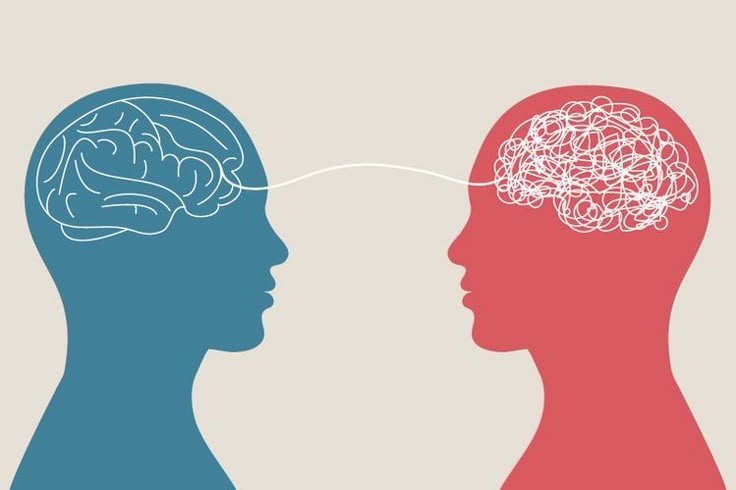
Mental health conversations often stop at awareness. But what happens after awareness, who gets trained, who gets access, and how science actually translates into practice, is far more complex.
In this conversation, educator and practitioner Disha Kalke reflects on her journey through clinical training, private practice, education, and the uneasy relationship between technology and care. What emerges is a grounded view of how mental health really works and where it breaks down.
1. Who Actually Accesses Mental Health Care?
Disha, currently based in Bangalore, holds an MSc in Clinical Psychology and a postgraduate diploma in Expressive Arts Therapy. She’s qualified the UGC NET examination, which allows her to teach; now a minimum requirement for universities. While she no longer does clinical work, her practice history reveals something striking about accessibility.
“More often than not, people end up in a doctor’s office,” she explains. “Depending on the doctor’s awareness, they may be directed to a therapist or psychiatrist but that’s mostly in tier-one cities, and even then, within a small section of society.“
People often turn to tarot readers, astrologers, crystal healers, and coaches as first points of contact. Very rarely do people directly approach a therapist because they recognize it as a mental health issue. When do they come directly to therapy? “The people who come directly to me as a therapist have been people in their 20s that are educated, that speak English, that come from a westernized sort of education system, either educated in India or abroad,” Disha notes.
2. The Weight of Stigma
One major idea persists: physical problems are acceptable, mental problems are not. Stigma also comes from the narratives we consume: films, music, popular culture. There’s fear of labels, fear of not being seen as “normal.” Mental illness is often thought of in extremes.
“Say, relationship concerns, because you’ve newly entered a relationship as an emerging adult but are struggling to adjust, can be stigmatized as,’Oh, she’s/he’s newly in a relationship, they need a therapist!’ Like, it’s such a shame and people would look down thinking you shouldn’t need a therapist at this point in your relationship. Not unless your relationship/marriage is at the brink.”
“I think stigma, any mainstream idea, in my understanding, will trickle down from the top,” Disha observes. “What do we value as a society in general? And it’ll trickle down to our immediate communities, to our subculture, to our families and our immediate friend circles, and then it comes to us. And stigma persists because there’s no accountability for misinformation. People get away with stigmatizing others.”
3. The Cost of Becoming a Mental Health Professional
When asked if psychology is an expensive and unsustainable path, Disha is unequivocal. “Absolutely. It’s extremely expensive, and not self-sustaining. For someone without a strong financial background, it’s very difficult to fund their education fully.“
RCI registration programs, especially in private institutions, can cost double-digit lakhs or more. Seats are very limited, competition is fierce, and there are even management seats to buy your way in. Many aspirants spend years giving entrance exams. Break years come with financial and emotional costs. There are people who want to be trained but simply cannot be, due to lack of infrastructure.
4. Technology, AI, and the Human Touch
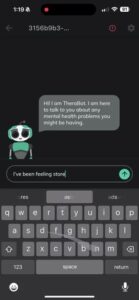
When discussing whether simulation tools like avatar-based systems could help bridge training gaps, Disha is cautiously open: “I think a simulation is a simulation. One can’t beat actually sitting in front of a client.“
She acknowledges the potential: “For a basic level of education, as a mental health professional and as an educator, I’m open to trying it out. It just increases the scope of things that can be done in the classroom.“
But her most intriguing suggestion flips the typical AI-in-therapy narrative: “Rather than put the client in touch with an AI therapist or vice versa, put the therapist in touch with an AI supervisor. Can there be an AI bot that helps me veer the direction of my therapy in a certain direction?“
“I feel like it’s very dangerous, but this could also be my general hostility towards tech tools entering,” she admits. “There is this kind of fear that tech tools like these could take out the human touch entirely from a psychological interaction. But therapy is so much more about these human and experiential aspects of it.“
5. The Role of Supervision
Supervision isn’t just for trainees. It’s the ethical backbone of good practice. “You work with a supervisor not just during training, but even after,” Disha explains. “Very seasoned therapists will work with supervisors who are slightly more experienced than them. More often than not, the triad of a client, a therapist, and a supervisor helps keep ethics in check and keeps the direction of therapy in check.”
Younger therapists, especially those with zero to five or seven years of experience, often continue supervision. It’s a healthy practice that provides a professional sounding board. Therapy can’t happen in isolation.
6. What Needs to Change
Disha sees structural opportunities at every level of education. “We live in polarised, extreme times. Young people today face very different risk factors than previous generations, especially with expanding tech exposure. Structurally we require some kind of compulsory mental health related education from a very young age. That is simple, that is effective, easy to understand. Something like emotional literature. And in our own native language.”
She advocates for coupling sex education with mental health, “not just biology, but how we think about sex, consent, and relationships.” Later in life, vocational choices, financial literacy, and career transitions also carry mental health implications. “Mental health should be treated like a language, like a second or third language, something we formally learn.“
On research, Disha points to a gap: “Indigenous and community-based arts have existed here for ages and are accessible to almost everyone. I think we could build robust frameworks to see why indigenous arts work for our people. Why can’t they be used more robustly in preventive mental health work rather than treatment work?“
Arts can be powerful for preventive mental health, playful, creative, safe. “We stop something before it happens in a way that is playful, in a way that is creative, in a way that feels safe to engage with,” she explains. “This way of therapy work is also not harmful in any way. But people might not look at talk therapy like that. There’s still that stigma associated with it.“
Final Thoughts
This conversation reveals a mental health landscape marked by access barriers, training costs, and cultural stigma but also opportunities for innovation that centers human experience. Whether through better education policies, culturally-grounded research, or thoughtfully deployed technology that supports practitioners rather than replacing them, the path forward requires listening to those doing the work.
As Disha reminds us, tools were always meant to be tools, “to be used for the client’s benefit, not to lock both therapist and client into a fixed mental set.” The same principle applies to how we build systems of care.
For more such conversations and any questions, you may reach out to her at dkalke0611@gmail.com.
This conversation points to important systemic & structural essentials in India to support mental health. I especially love the idea of having emotional literature starting off young because that will help with regard to stigma, pop psychology not just for children but also already-adults. Children’ picture book format could make this even more nuanced & wholesome, something thats not just easy but also fun to engage with. Introducing this in schools as a resource book along with a workbook in order to expose kids to engage with mental health practices/activities & not just read about them.
Thanks so much Aarushi! This means a lot coming from someone in the field! Absolutely agreed. Emotional training and development can start much younger. Such formats as picture-books, workbooks would be much appreciated and are a need of the hour, honestly. Would love to see how these can be implemented and be introduced as policy level changes.