
For decades now, mental health care has been built around a central idea: that psychological distress becomes easier to treat once it can be expressed. However, for many people, especially young adults, emotional insight is not the problem. The challenge lies in the fear, discomfort and social vulnerability that can accompany being emotionally transparent with another person. In therapeutic settings, the act of speaking openly is shaped not only by emotion but by social perception. Self consciousness and fear of being evaluated in real time can influence how much a person is willing to reveal, even in supportive clinical environments.
To explore how digital environments might reshape emotional communication, some of our researchers at TRANSiT Lab, Kanpur implemented an avatar based counselling framework for university students. In this study, participants, during counselling sessions, interacted through customizable digital avatars animated in real time using facial-tracking algorithms that mapped facial expressions, gaze and head movements from webcam input onto the avatar . Rather than functioning as static characters, the avatars acted as responsive digital representations of the participants’ emotional states.
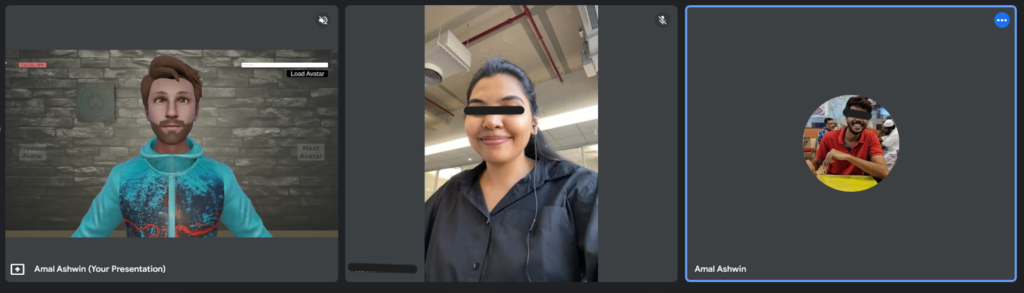
The researchers grounded the intervention in a psychological framework known as Symbolic Interactionism, the idea that people construct and understand themselves through symbols, representation and social interaction. Within Avatar Therapy, the avatar becomes more than a digital character; it functions as a symbolic extension of self. The psychological logic behind the approach aligns with what researchers call the Online Disinhibition Effect. Reduced eye contact, softened social hierarchies and a sense of mediated distance can alter how vulnerability is experienced during emotionally sensitive interactions.
Many participants reported that speaking through an avatar felt less emotionally exposing than direct interaction. The mediated format appeared to reduce self-consciousness and fear of judgement while still preserving a sense of personal connection. Several students described the avatar as functioning almost like a psychological buffer, close enough to feel personal, yet distant enough to make difficult emotions easier to approach.
Interestingly, several participants reported that communicating through avatars altered the perceived power dynamics of therapy itself. Conversations felt less intimidating and more collaborative than conventional face-to-face interaction. Therapists also noted shifts in relational dynamics during avatar-mediated sessions. By softening the interpersonal intensity of direct interaction, the interface appeared to create a more psychologically balanced therapeutic space.
Pre- and post-intervention assessments suggested improvements in both stress perception and self-expression among participants. Still, the study involved only ten students and did not include long-term follow-up or comparison groups, meaning broader conclusions remain limited. Although the findings suggest that avatar-mediated counselling may positively influence emotional openness and psychological distress, the study was exploratory in nature and conducted within a relatively small university sample.
As more aspects of emotional life move through digital spaces, Avatar Therapy raises an unexpected possibility: under certain conditions, people may become more psychologically honest not when interaction is completely direct, when it is carefully mediated. The future of mental health technology may depend less on replacing human connection and more on redesigning the conditions under which emotional safety becomes possible. Avatar Therapy suggests that technology’s role in mental health care may not simply be to increase access or automate support, but to reshape how vulnerability itself is experienced during human interaction.